
KEG FILLERS FOR KEGS OF ALL SIZES AND CAPACITIES
It fills the kegs with the drink after inserting a counter pressure which avoids foaming
Our keg filler is designed to fill any type of keg with a drink taken from an open container using a pump or, alternatively, from a pressurized tank.
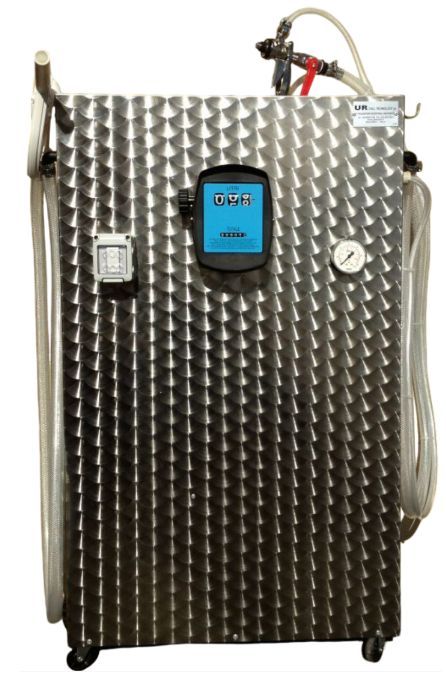
Characteristics of the Kegs Filler
They are semi-automatically operated machines built for kegging wine or beer or other drinks into kegs.
They are called ENOL 1 and ENOL 2 depending on whether they can be connected simultaneously to one or two kegs to be filled
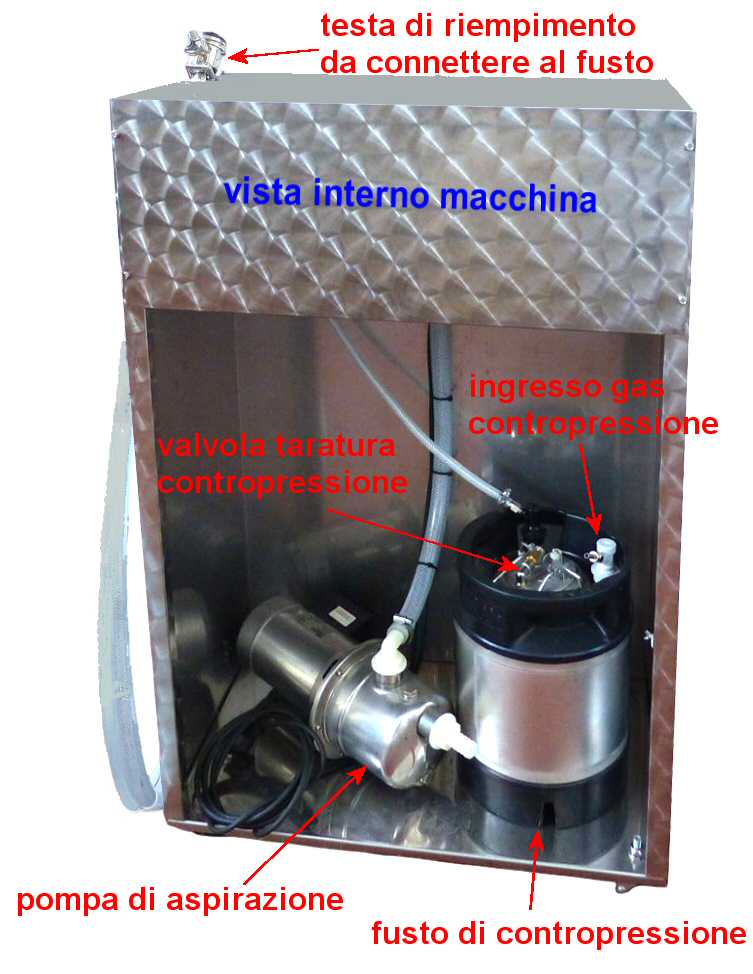
The Enol keg filler is suitable for operation both with still wine, as it is complete with a filling pump, and with sparkling wine or beer (ENOL/Without Pump), providing the filling via the pressure of the autoclave from which the liquid is taken. The operation involves the preventive introduction of inert gas into the kegs, to avoid oxidation of the drink, and to create the back pressure that solves foaming problems; the maneuver is carried out by connecting the tapping head to the keg connector and opening the tap positioned above the tapping head.
- The kegs filler casing and all parts in contact with the liquid are made of AISI 304
- Model with loading pump for still wines and single head for 1 barrel (ENOL1)
- Model with loading pump for still wines and double head 2 barrels (ENOL2)
- Model without loading pump for fizzy drinks from autoclave (ENOL/SP)
- Available for various types of barrels and attachments
- Filling speed (3' - 4' depending on the back pressure used) for 25 liter kegs)
- Dimensions 700x450xh1000 – Weight: 33 kg – Pump: 0.6 hp single-phase
| art. | Model. | €. |
|---|---|---|
| 139 | KEG FILLER ENOL 1 | 2140,00 |
| 140 | KEG FILLER ENOL 2 | 2435,00 |
| 138 | KEG FILLER ENOL 1/SP | 1830,00 |
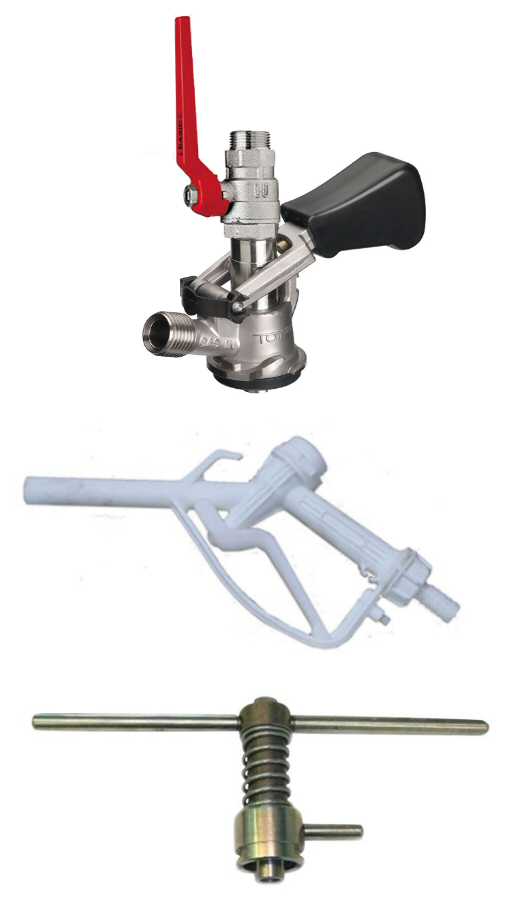
| 63 | Bayonet connection with tap for ENOL | 155,00 |
| 108 | Filling gun in food-grade polypropylene | 32,00 |
| 74-B | Wrench for unscrewing kegs valves | 356,00 |
PUMPS FOR BEVERAGE TRANSFER
Electric centrifugal impeller pumps for transferring fluids.
Self-priming stainless steel pumps with flexible impeller at low speed, suitable for the transfer of delicate and fragile, viscous fluids, even with suspended bodies. The pumps are widely used in the WINE (wine, must, must and destemmed grapes), FOOD (beer, fruit juice and pulp, honey, liquid sugar, syrups, glucose, milk, butter, yogurt, liquid eggs, oil, tomato sauce, brine, etc.), CHEMICAL (starch, water-based glues, emulsions, glycerin, wax, detergents, rubber latex, photographic liquids, paints, inks, industrial waste, etc.), COSMETIC and PHARMACEUTICAL (liquid soaps, detergents, shampoos, creams, etc.).

Main operating characteristics and benefits
Operating principle - The flexible blades of the impeller deform and suck the liquid inside the pump, continuously transferring it to the outlet (drain). This principle combines gentle pumping with high self-priming capacity.
- Flow rate: from 0 to 72,000 litres/hour
- Fluid temperature: up to 100 °C
- Maximum differential pressure: 4 bar
- Self-priming (automatic suction of the product up to 6 m deep even when dry).
- Reversible (works in both directions of rotation, allowing any excess liquid to flow back without manual intervention and facilitating emptying of the pipes at the end of the transfer).
- Excellent performance already at low rpm which allows the transfer of delicate and fragile fluids, viscous up to 50,000 cp even with suspended bodies and without aerating, emulsifying and damaging the solid parts.
- Product transfer without pulsations (continuous flow excellent for dosing, filling and filtration).
- Fittings (DIN 11851, Garolla, BSP, Macon, Triclover, SMS, BSM/RJT).
- Body in AISI 304/316 stainless steel
- Reversible mechanical seal (Steel-Graphite-NBR, Tungsten Carbide-NBR, Tungsten Carbide-Viton, etc.).
Natural Rubber (NR) - Excellent for water-based liquids at room temperature, maximum mechanical resistance.
Neoprene (CR) - Good compromise between mechanical and chemical resistance.
Nitrile (NBR) - Excellent resistance to oils and greases.
EPDM - Excellent for hot fluids, compatible with CIP process. Excellent for alkaline and acidic fluids.
Silicone (VMQ) - Excellent for high temperatures, low mechanical resistance.
Ask for capacity and cost tables of the various models available